

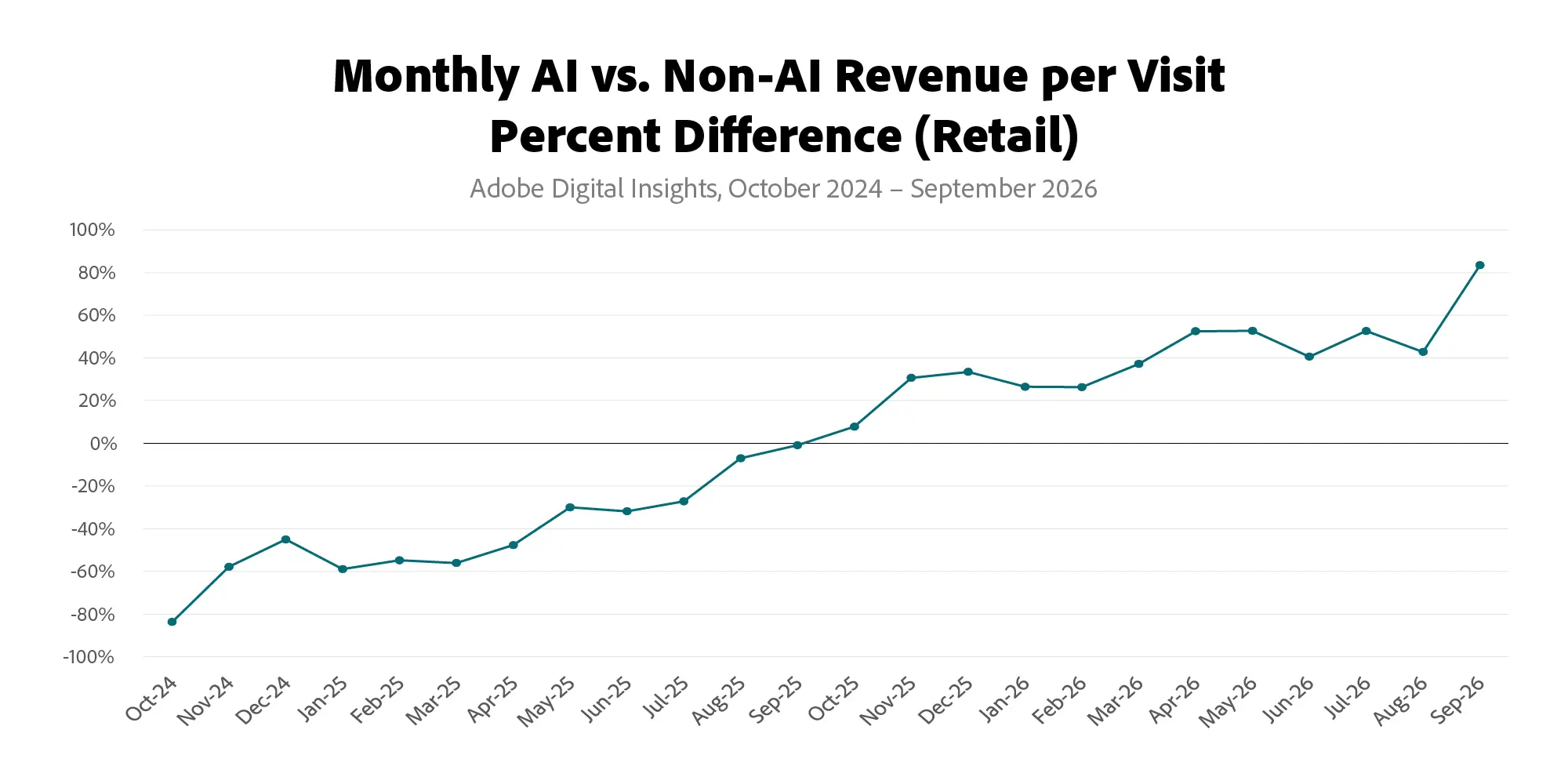
Shoppers who land on US retail websites from AI tools now generate 83% higher revenue per visit than visitors from other channels, according to new data from Adobe. AI-referred traffic to US retail sites grew 71% year-on-year in September 2026, and Adobe expects the gap to widen through the holiday shopping season.
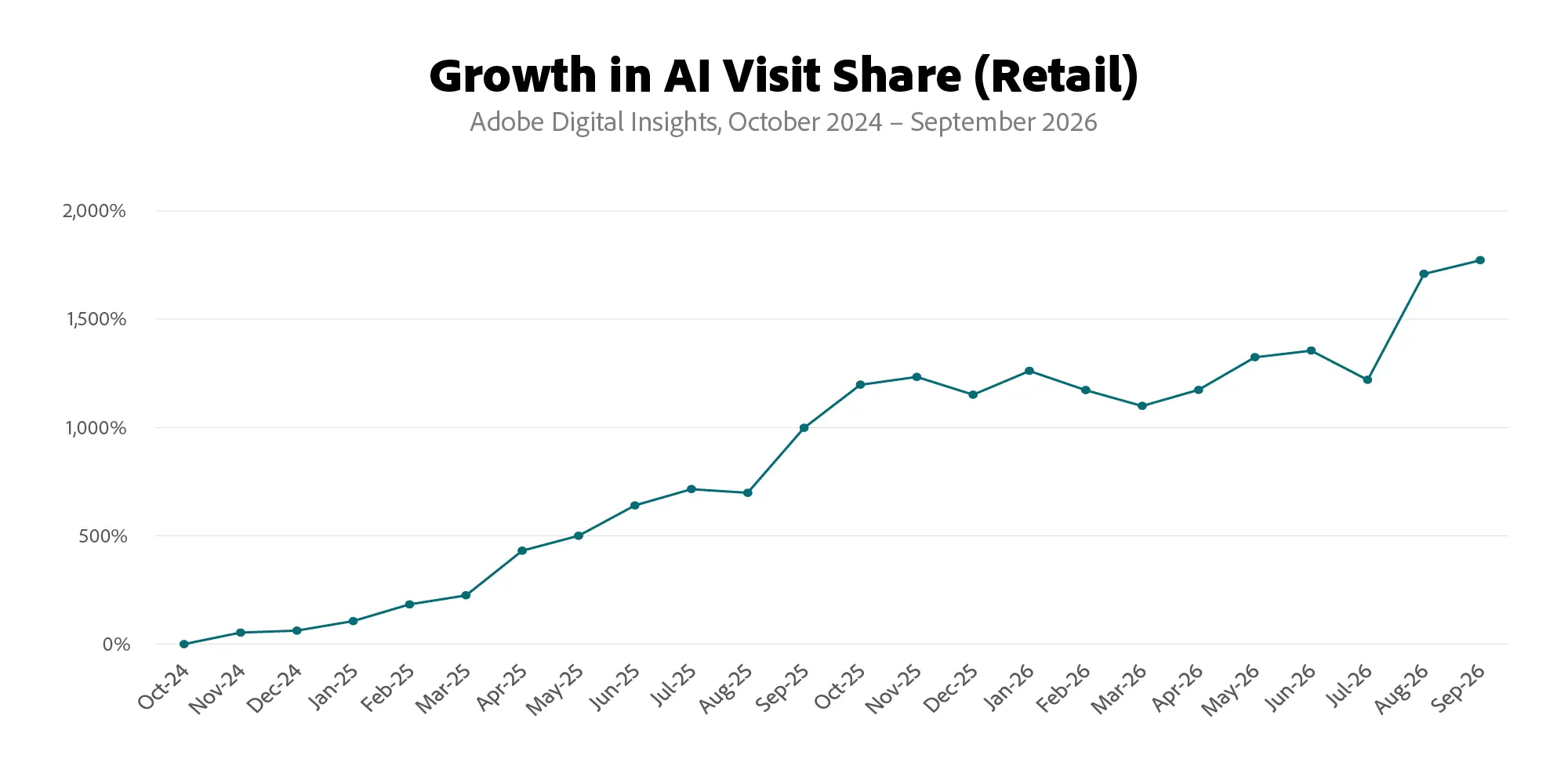
The findings are based on Adobe Analytics data covering more than 1 trillion visits to US retail sites, 100 million SKUs and 18 product categories, along with a survey of over 5,000 US respondents conducted in September.
The shift has been quick. In August 2025, AI-referred traffic converted 9% worse than non-AI traffic such as email, paid search and social. This September, it converted 90% better, the highest level Adobe says it has recorded. A year ago, an AI-referred visit was worth less than half of a typical visit; it is now worth nearly twice as much.
Once on a retail site, these visitors also spent 73% more time, viewed 25% more pages per visit and added products to their carts at a 53% higher rate than non-AI visitors, Adobe says.
Part of the gap comes down to intent. Shoppers who use AI assistants to research products often arrive at a store having already narrowed down what they want, so the data shows AI-referred visitors are more valuable on average, not necessarily that AI tools cause people to spend more.
Looking ahead to the holiday season, Adobe projects AI traffic to US retail sites will rise 159% year-on-year on Thanksgiving, 95% on Black Friday and 88% on Cyber Monday, and it expects AI’s revenue-per-visit advantage to double over the season.
The report also argues that retailers need to make their content easy for AI systems to read and cite. On Adobe’s own Citation Readability Score, the average US retail homepage scored 63%, which Adobe says means over a third of homepage content is effectively invisible to the AI tools sending these shoppers. Electronics pages scored highest at 79%, helped by detailed specs, setup guides and troubleshooting content, while grocery scored 55% and general merchandise homepages just 40%. It is worth noting that this conclusion, invest in AI-visible content, aligns with the analytics and content tools Adobe sells to retailers.
For brands, the message is straightforward: AI assistants are becoming a front door for high-intent shoppers, and pages that answer questions clearly, from product details to FAQs and return policies, are the ones AI tools can find, understand and recommend.

