

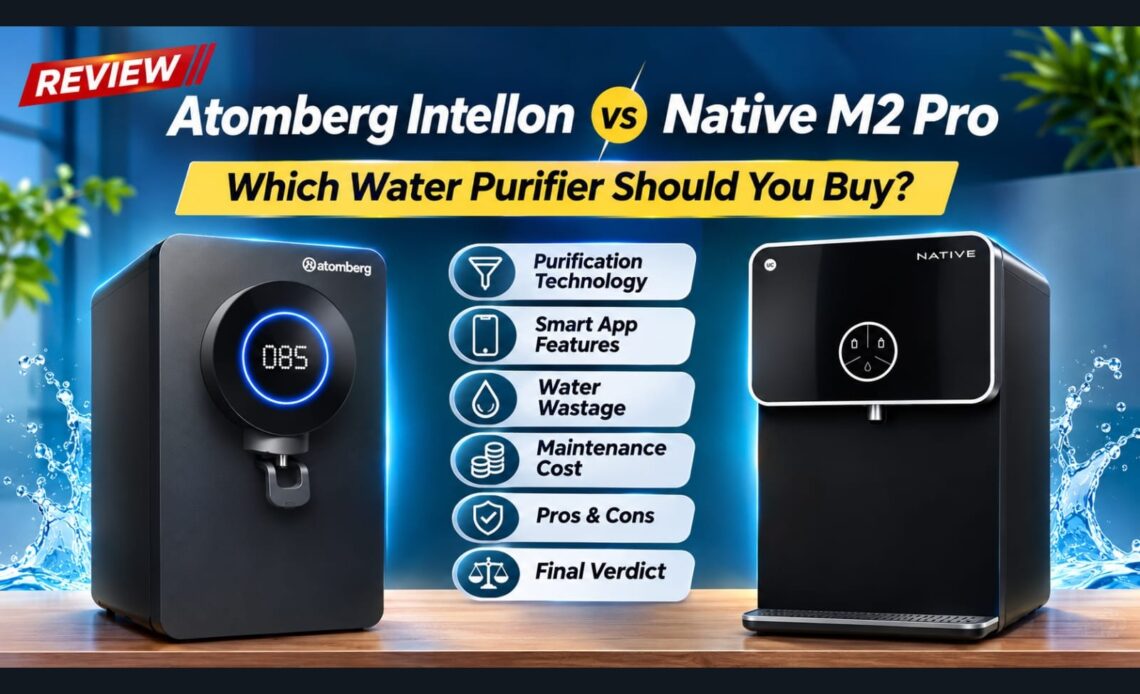
The choice between these two purifiers became clearer the longer I used them: do you want more control over how water is purified, or more convenience every time you fill a glass?
Atomberg Intellon’s appeal is its selectable purification modes and taste settings. Native M2 Pro’s is more immediate: useful glass and bottle presets, touch dispensing and a retractable tray. After using both on the same borewell supply, those are the differences that matter most to me.
The short comparison
Atomberg Intellon
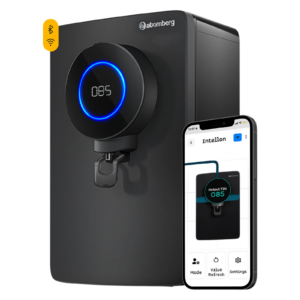
| Purification approach | Adaptive Flow, RO + UV, TasteTune and Vacay modes |
|---|---|
| Storage | 8 litres |
| Dispensing | Manual tap, including stored water during power cuts |
| App controls | Mode selection, taste bands and individual component health |
| Installation | Wall mount or countertop |
| Listed price, checked 22 Nov | Rs 18,999 |
Native M2 Pro
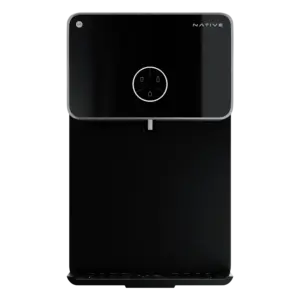
| Purification approach | Full-RO system with UV, mineraliser, copper and alkaline treatment |
|---|---|
| Storage | 7 litres |
| Dispensing | Touch controls, glass/bottle presets, retractable tray and battery backup |
| App controls | Dispensing presets, TDS/status dashboard and diagnostics |
| Installation | Wall mount |
| Listed price, checked 22 Nov | Rs 17,999 |
Listed prices checked on 22 November 2026. This comparison is of the regular Native M2 Pro.
As an Amazon Associate I earn from qualifying purchases.
Atomberg Intellon on Amazon
Native M2 Pro on Amazon
Design and daily use: Native makes dispensing easier
Intellon has an 8-litre tank and supports wall mounting or countertop placement. Native M2 Pro has a 7-litre tank and is designed for wall mounting.
Intellon’s matte finish is the more practical one in my daily use. Native’s glossy finish looks attractive, but dirt, fingerprints and smears show more easily.
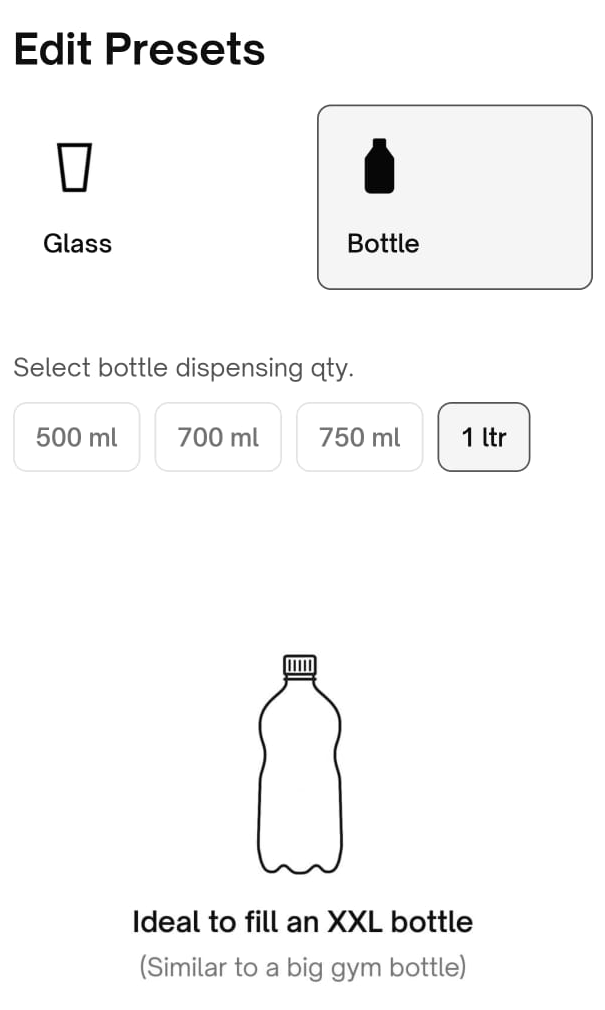
Native’s dispensing system stood out to me. There are three options: a glass, a bottle and free flow. Its retractable tray gives you somewhere to rest the glass or bottle while filling it.
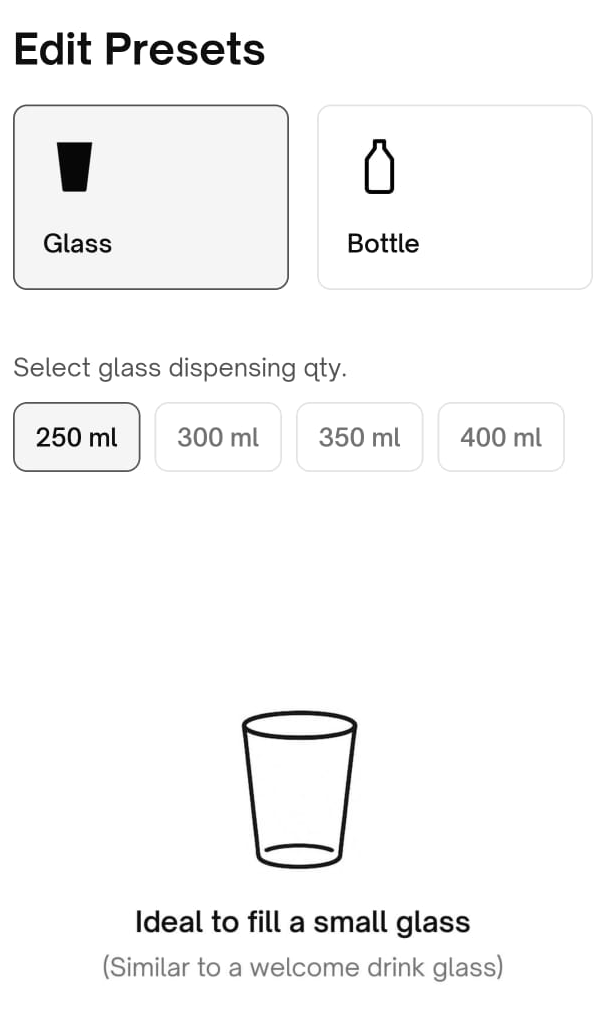
The app offers glass presets of 250, 300, 350 and 400 ml. For bottles, the choices are 500, 700 and 750 ml, or 1 litre. You can set your preferred glass and bottle quantity from these options.
Native’s automated filling is genuinely practical, rather than a feature I tried once and forgot about. The presets and tray are its strongest everyday advantages for me.
Neither purifier produced noticeable operating noise during my use. Intellon’s LED interface is not something I regularly interact with; I find it useful mainly for alerts, rather than as a daily-use advantage.
Using both with 930 ppm borewell water
I used both purifiers with the same borewell source, with TDS around 930 ppm. With Intellon, I emptied and refilled the tank after changing modes.
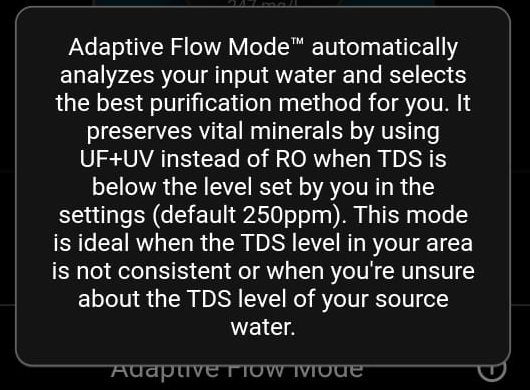
At that incoming TDS, Adaptive Flow’s described logic would select RO + UV with the app’s default 250 ppm threshold. The ability to avoid RO becomes more relevant if the supply changes to water suitable for its UF + UV route. That is the practical reason I value the flexibility, rather than expecting it to bypass RO on my current borewell water.
Adaptive purification versus full RO
Intellon has four modes: Adaptive Flow, RO + UV, TasteTune and Vacay. Its seven-stage system includes RO, UF, UV, an alkaliser and a taste enhancer.
Adaptive Flow monitors incoming TDS and selects the purification route according to the threshold set in the app. Below the selected threshold, it uses UF + UV rather than RO. When the incoming TDS rises above that threshold, it uses RO + UV. You can also select RO + UV yourself.
The practical attraction is less unnecessary RO operation when the supply is suitable for the UF + UV route. Atomberg says this reduces RO reject water, retains more of the water’s dissolved minerals and can extend membrane life.
There is also a location-based safeguard. Atomberg uses government groundwater records to flag areas with known heavy-metal contamination; in those areas, the system locks to RO + UV and disables Adaptive Flow and TasteTune.
Native M2 Pro takes the full-RO route. Its ten-stage system includes RO + UV, a mineraliser, copper and alkaline treatment, with all water passing through RO.
For me, the important distinction is the choice of purification modes, rather than seven stages versus ten. Intellon’s flexibility is appealing when a household’s supply changes; Native keeps the purification route consistent.
TasteTune: choose the taste you prefer
Intellon’s TasteTune mode offers three TDS bands: 50-100, 75-125 and 100-150. It adjusts the balance of RO + UV and UF + UV treated water to target the selected band.
In use, I did not notice a substantial difference in taste between the two purifiers. There may have been a very slight difference, but nothing that stood out. TasteTune gives me a choice, but it did not translate into a significant taste advantage in my experience.
Choose the taste you prefer, but TDS alone does not tell you whether water contains specific harmful contaminants.

The apps: dispensing control and filter visibility
Native’s app lets me change the glass and bottle presets, as well as check filter status, tank level, water usage and diagnostics. Its dashboard displays output TDS as a 40-60 ppm band.
The app’s health check covers 13 checks across connectivity, inlet and output TDS, tank-water status, purification, dispensing, pressure, filter health, UV, self-cleaning, battery backup and firmware.
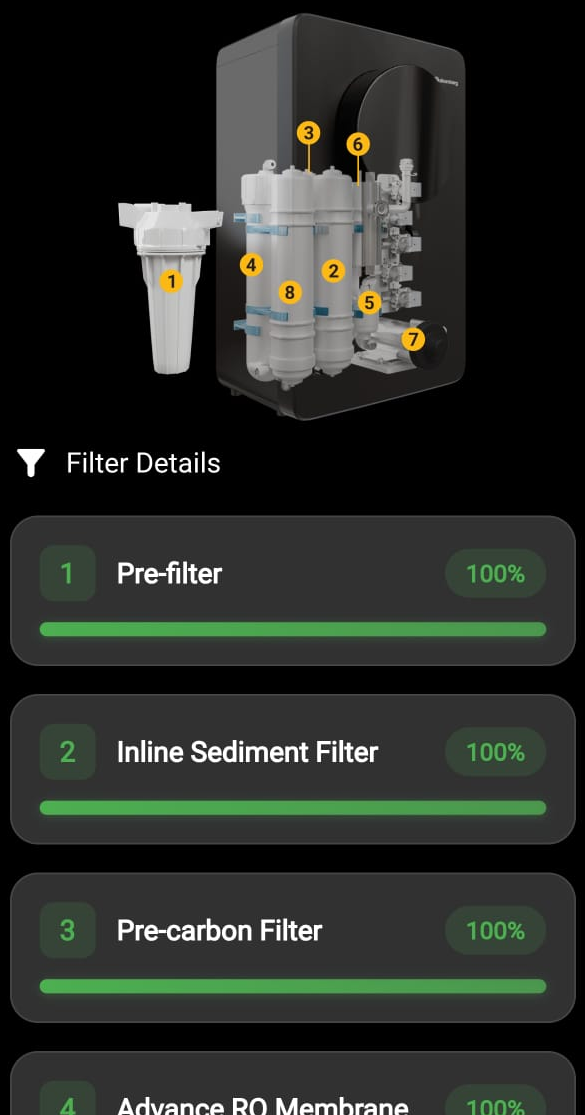
Intellon’s app gives me purification-mode selection, TasteTune settings and individual component-health information. It separately lists the pre-filter, inline sediment filter, pre-carbon filter, RO membrane, UF membrane, UV lamp, pump and alkaliser/taste enhancer.
That individual view is useful when checking which part needs attention. The app also offers diagnostics and a way to contact service for help. Native’s appeal is the dispensing control alongside monitoring; Intellon’s is the control over purification and the more detailed component view.
Water wastage: the RO figures are close
Atomberg quotes approximately one litre of reject water for every litre purified in RO + UV mode. Native quotes 48.7% RO recovery, meaning roughly half the incoming water becomes purified water. On their published figures, the two are close when running RO.
Intellon’s difference is Adaptive Flow: when the water is suitable for its UF + UV route, it avoids RO reject water. The opportunity to save water therefore depends on the supply and how often the purifier can use that route.
Power cuts: manual tap versus battery-backed touch control
Intellon dispenses stored water through its manual tap, so I can draw water from the tank without electricity. Native M2 Pro uses touch controls, with an in-built battery that keeps stored-water dispensing available during a power cut.
Filters, service and maintenance costs
The difference here is the servicing approach. Intellon provides individual component visibility and condition-based replacements after its initial coverage. Native offers a Refresh package that replaces filters and renews warranty coverage.
The eight-year figures below cover service only, not the purchase price. Atomberg’s figures are its own source-dependent illustrations. Native’s is my calculation of three future kits after the first two years, assuming the current kit price stays unchanged. Neither is a guaranteed future bill.
Atomberg Intellon
| Initial coverage | 2 years: defective filters, membranes, electrical components and technician visits; authorised installation/service required. |
|---|---|
| After initial coverage | Condition-based replacements, not a compulsory fixed AMC. |
| Eight-year service illustration | Atomberg estimate: about Rs 9,300 for municipal supply or Rs 12,000 for borewell/tanker water. |
Native M2 Pro
| Initial coverage | 2 years: filters, membrane, parts and labour; inlet up to 2,000 ppm and usage up to 12,000 litres. |
|---|---|
| After initial coverage | Native Refresh package: Rs 5,499 for replacement filters and another 2 years of warranty coverage under its terms. |
| Eight-year service illustration | Calculated scenario: 3 kits × Rs 5,499 = Rs 16,497 after the initial covered period. |
Strengths and trade-offs
Atomberg Intellon
What I like
- Selectable purification modes, TasteTune and individual component-health information.
- Practical matte finish, 8-litre storage and a countertop installation option.
What to consider
- Manual dispensing does not offer Native’s automatic filling presets.
- The opportunity to avoid RO depends on the supply, selected threshold and location safeguards.
Native M2 Pro
What I like
- Useful automatic glass and bottle presets, with a convenient retractable tray.
- Battery-backed touch dispensing keeps stored water accessible during power cuts.
What to consider
- Glossy surfaces show fingerprints and smears more easily.
- Wall mounting only, without Intellon’s equivalent choice of purification modes.
Which one makes more sense?
If I were choosing for everyday filling convenience, I would pick Native M2 Pro. Its automatic presets and tray make a useful difference each day. Its glossy finish needs more attention, but those dispensing features are what stood out most to me.
Intellon is the more interesting choice for purification control. I prefer its practical matte finish, and the mode choices matter if the household’s supply changes. On my current high-TDS borewell supply, though, the adaptive system’s described logic still calls for RO; the flexibility is not the same as a constant water-saving advantage.
I would not choose between them on taste or noise: neither had a decisive advantage in my use. Start with the treatment your water needs, then choose what matters more to you: Intellon’s purification flexibility or Native’s everyday dispensing convenience.
As an Amazon Associate I earn from qualifying purchases.
Atomberg Intellon on Amazon
Native M2 Pro on Amazon
Sources
Listed prices and service terms checked on 22 November 2026. App features and personal impressions are from my use of the two purifiers.
Atomberg Intellon: specifications, modes and service terms
Native M2 Pro: specifications and service terms
